
Custodians Of Conditions
How Choosing To Trust Children Transforms The Adults In Charge
This social impact story is about Brave Feats Student Care, a Resident Partner of Common Ground Civic Centre, in collaboration with Peacehaven Nursing Home (The Salvation Army).
March 2026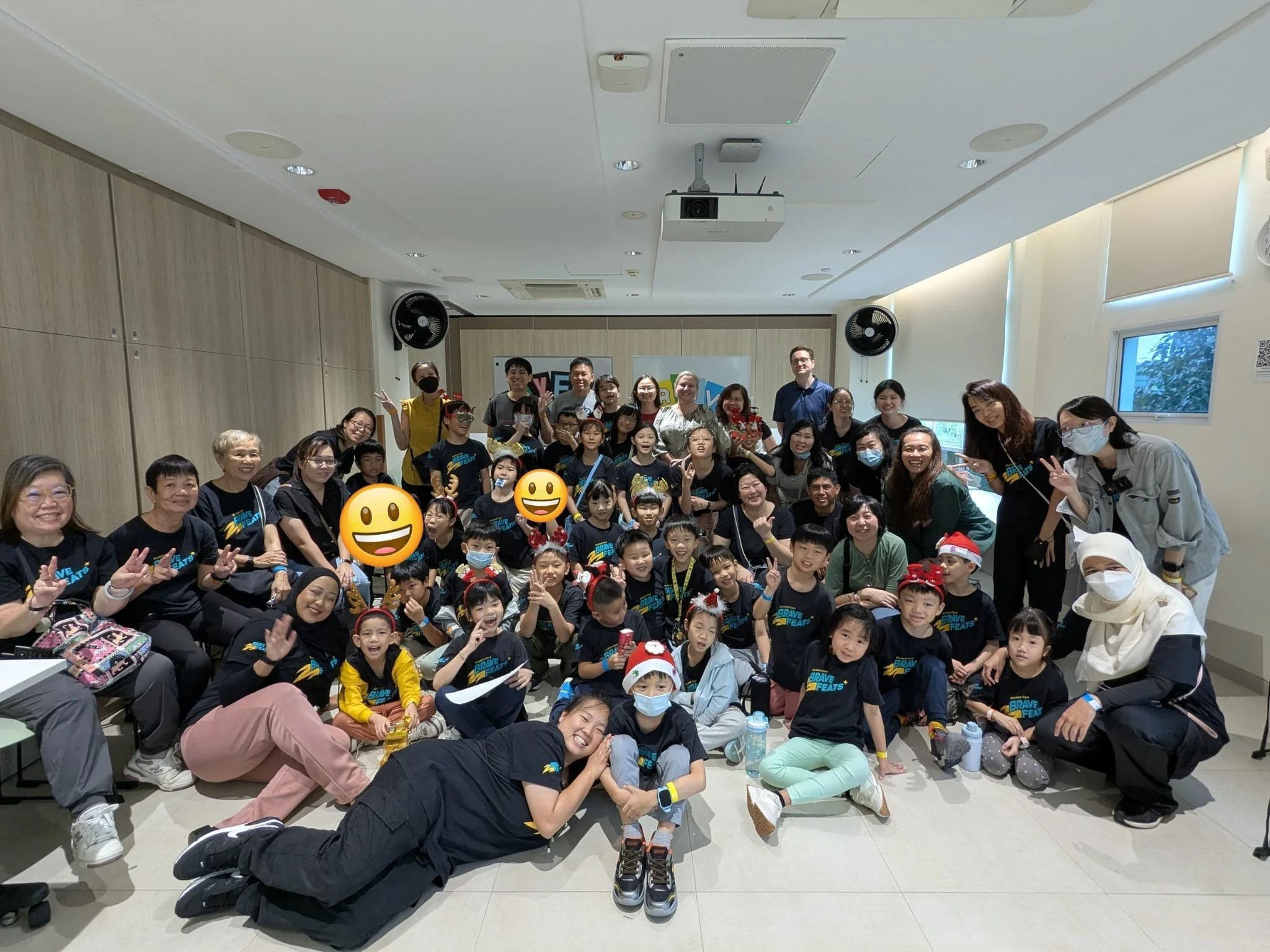
It started, as many important things do, with a conversation.
Somewhere in the afternoon rhythm at Brave Feats Student Care Centre, a teacher paused to chat with a child. Then another. And what emerged from those exchanges was an observation: some of the children struggle to connect with their grandparents at home. They did not know how to speak dialects. Their grandparents, in turn, did not always know how to reach across that silence. And many times - a phone screen filled the space between them.
As the Brave Feats team pondered about this gap and planned for their annual community outreach, the idea of reaching out to a nursing home came up.
Brave Feats’ commitment to cultivate a student care culture in Singapore that creates positive, joyful and empowering spaces takes the form of running at least one community-based project each year, where they:
help the students to be aware of different communities that exist,
introduce them to real world experiences and learn beyond the classroom,
encourage children to spread joy through impacting communities.
Holding those intentions, The Joyful Carnival was conceived: a one-day event held on 28 November 2025 that would bring Brave Feats's primary school students to Peacehaven Nursing Home for an afternoon of games and performances.
However, the goal was not just to put on a show. Most importantly, it was to give both children and seniors the chance to interact with each other through authentic human connection.
The Work Before The Work
Leading up to the carnival, many things were required to pave the way:
establishing a connection with Peacehaven
hosting a talk on dementia to increase awareness
bringing in someone to teach the children how to dance
organising a dialect crash course to introduce simple Hokkien phrases
discussing with the children on what games to share and gifts to purchase
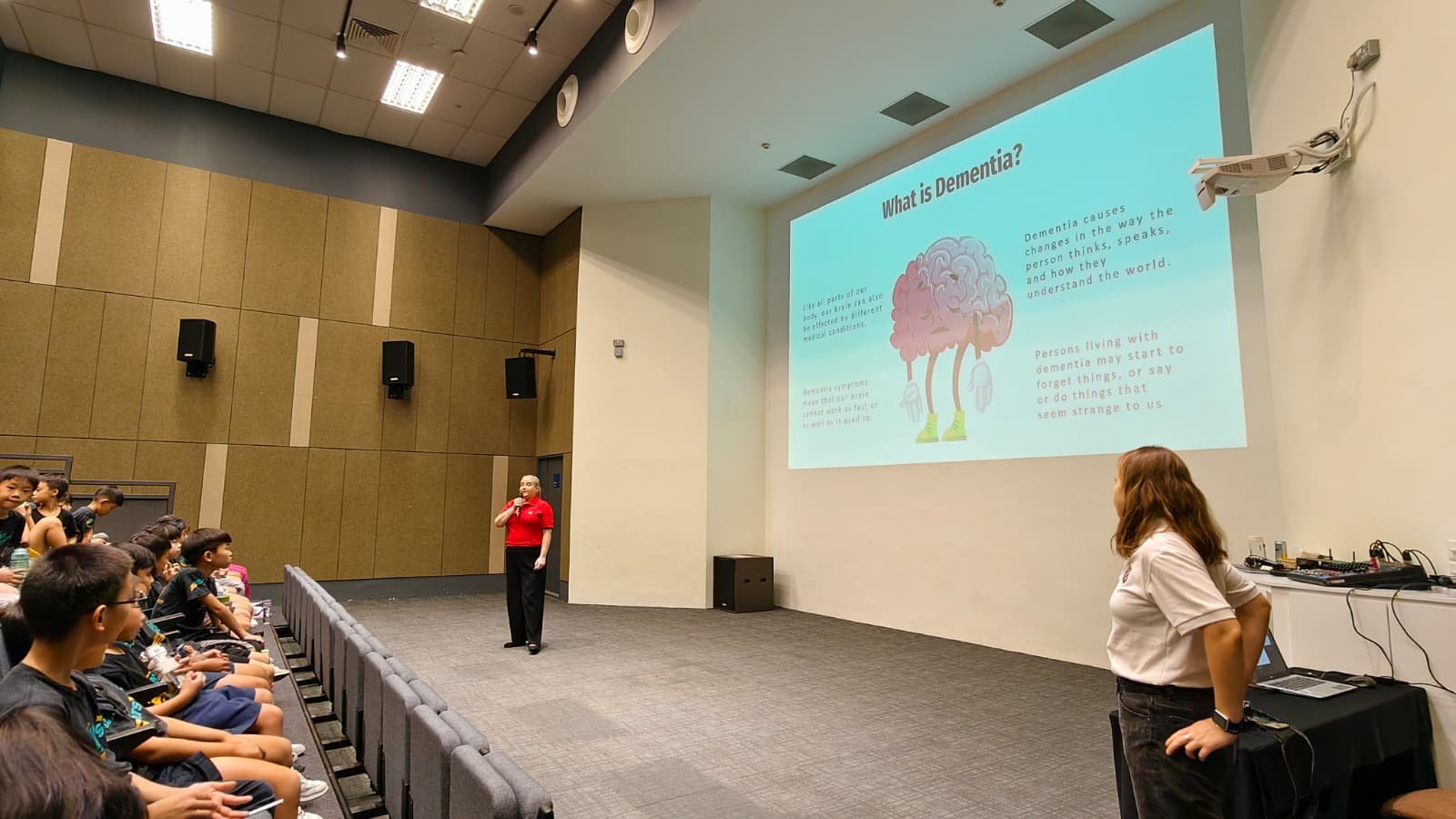
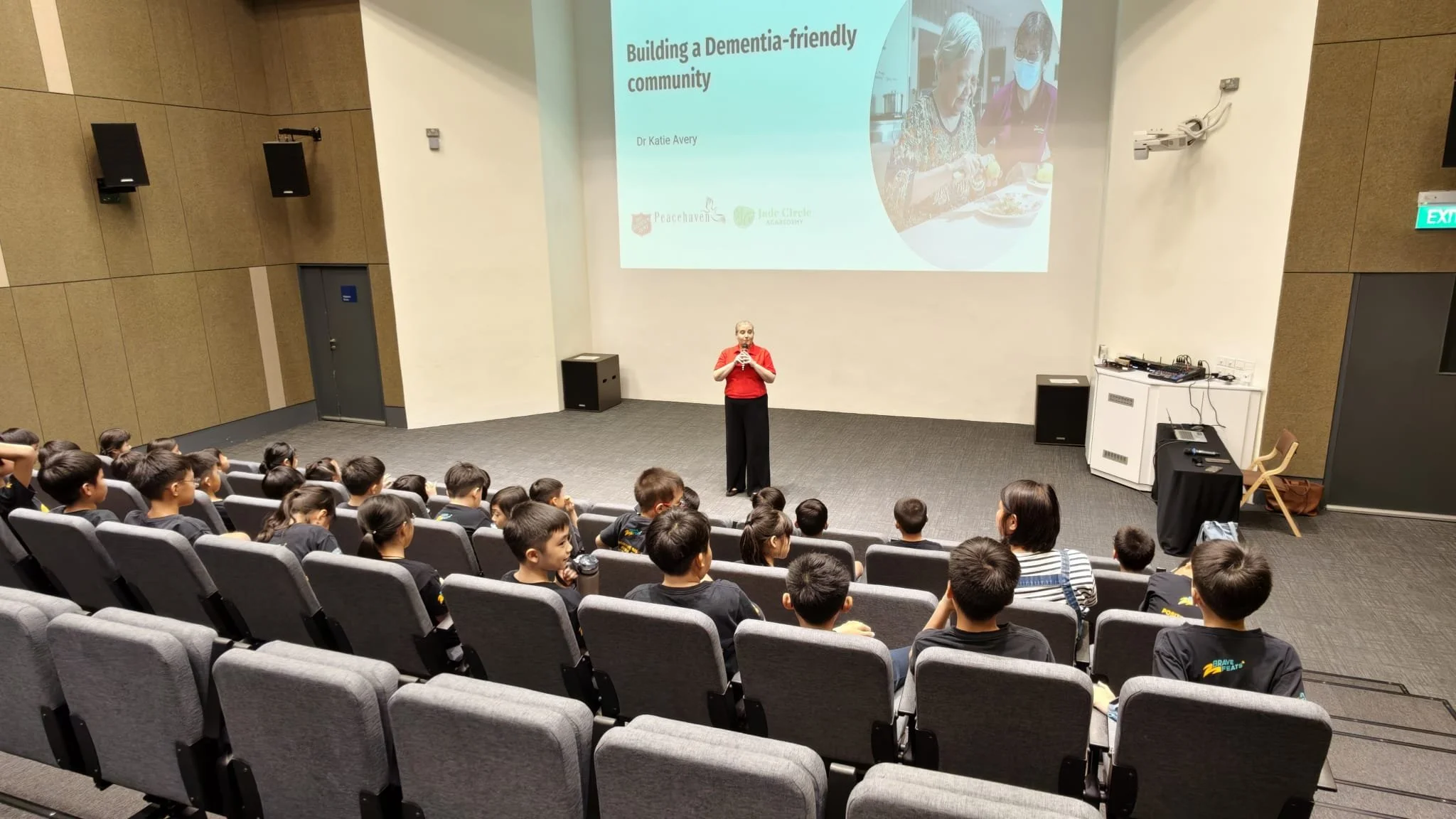
The students got to listen to Dr Katie from Peacehaven, who introduced them to dementia and helped them understand the needs and challenges faced by elderly residents.
The statistics were sobering: dementia affects one in ten people over the age of sixty. Dr Katie introduced the children to the CARE framework — a set of principles for interacting with seniors:
use clear instructions,
acknowledge their responses, and
approach every moment with respect and engagement.
Dr Katie also shared insights on the types of games and activities that would be suitable, engaging, and meaningful for them.
Through this talk, it planted ideas that the children would later harvest on their own, as they went about planning for the carnival.
Helping Children Take the Wheel
After the talk, the children were gathered in brainstorm conversations with one another. What might the seniors need? What would make the carnival meaningful? What does success look like to them?
This is the spirit of Brave Feats Student Care - to empower children in learning and growing through the process, instead of being told what to do.
From conversations supported by the teachers, the children organised themselves into working groups: gift preparation, games, decoration, and performance. They were given budgets and taken shopping. They drafted the rules for games, with one guideline from the teachers: the rules must be clear, simple, and easy for an elderly person to remember. Each group proposed two games. Then, in a moment that captured the empowering spirit of the whole endeavour, teachers and children voted together on which games to include.
One of the Brave Feats teachers, Mdm Liu, also taught the kids some conversational Hokkien in preparation of the carnival as well.
“As someone new to Brave Feats, I’m amazed by the children and how independent they are.
If the teachers were to fully plan for the carnival, it will be faster and more perfected. But when we empower the children to take lead and come up with ideas, I see them grow through the process.”
– LI TING LIAUW, BRAVE FEATS Principal
The day of the carnival welcomed much laughter and cheer. The elderly enjoyed the games, and the children were really patient with them. The teachers were pleasantly surprised by how the Joyful Carnival went down, and the parents had a wonderful time as well.
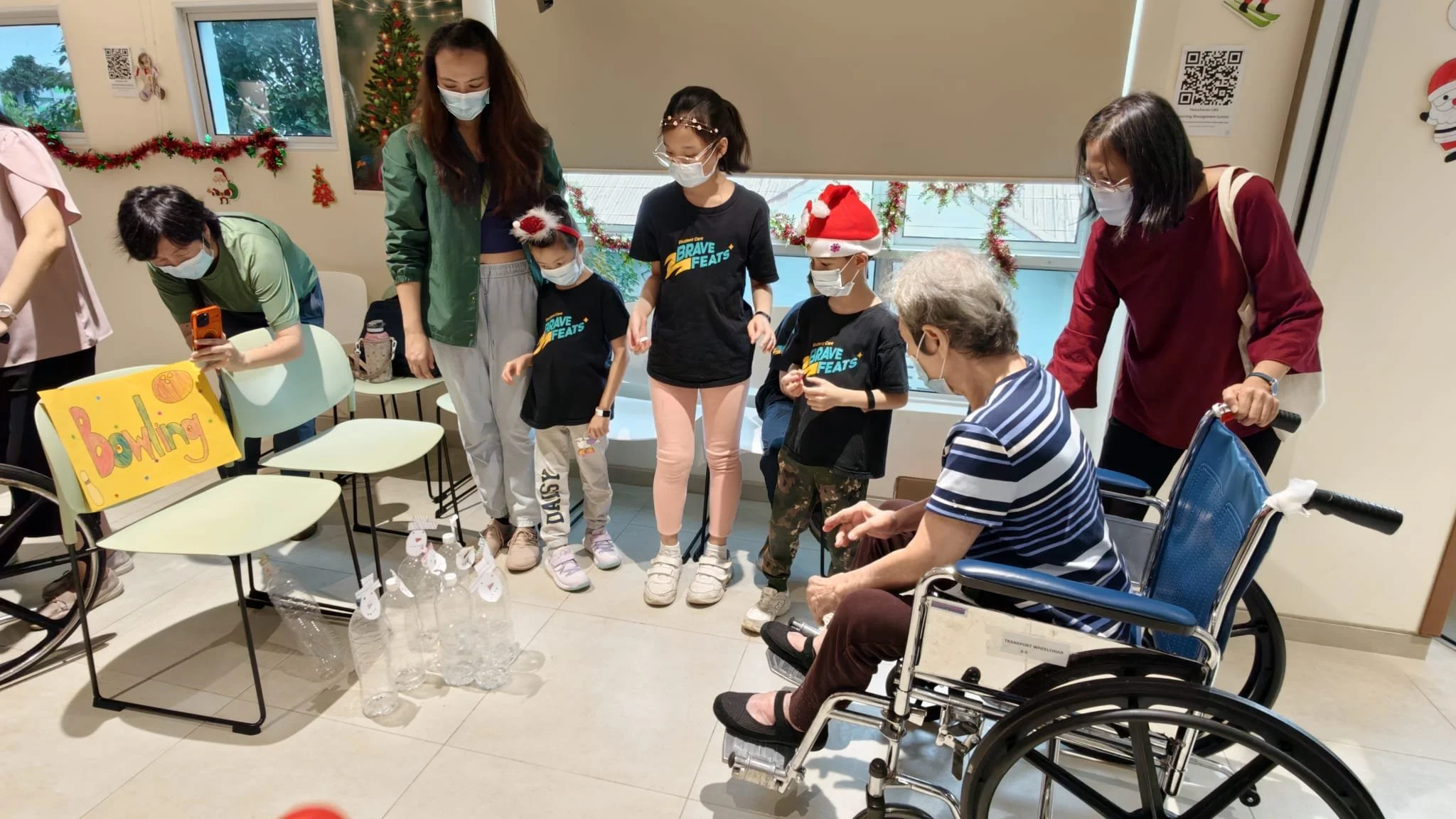
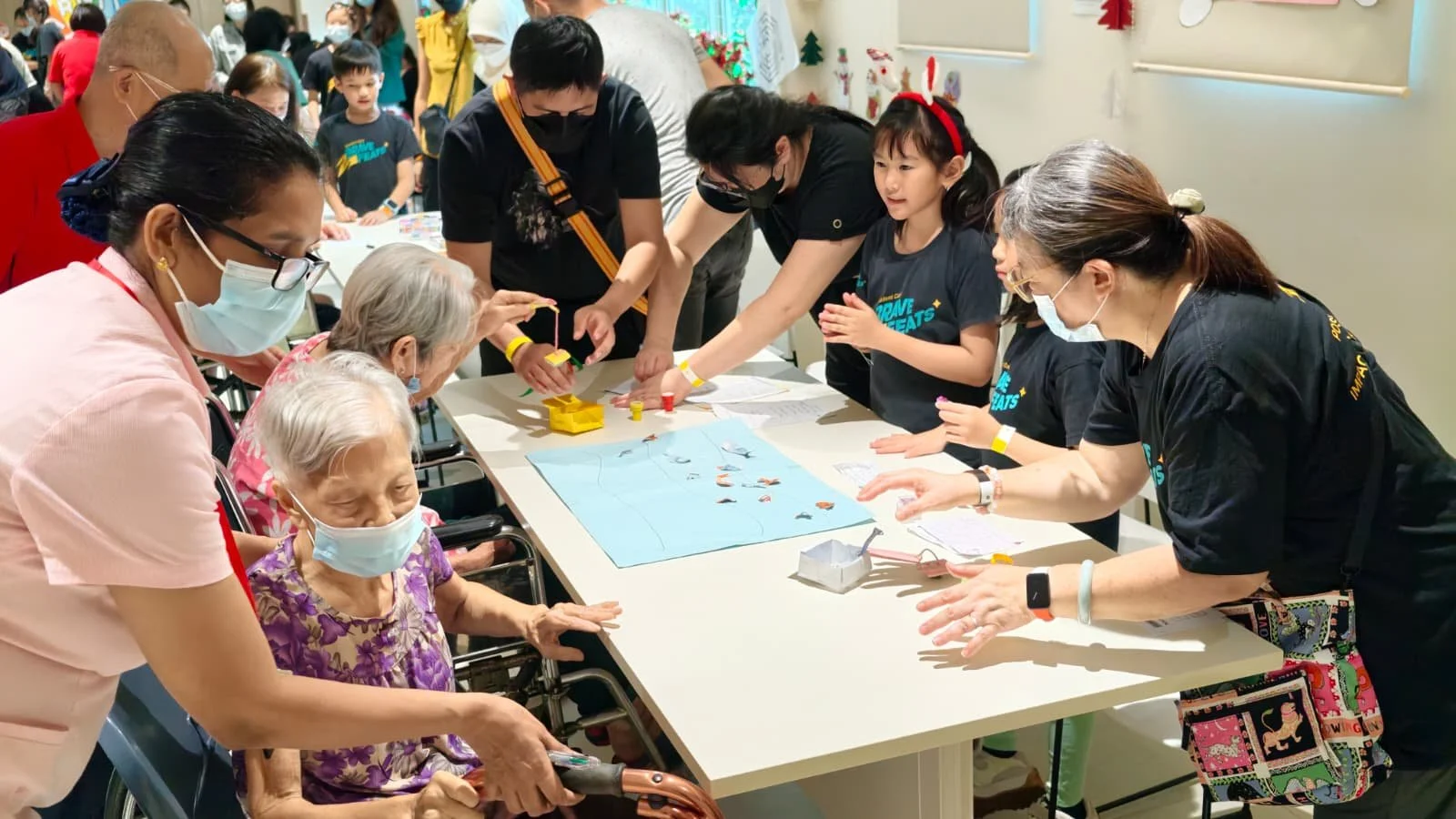
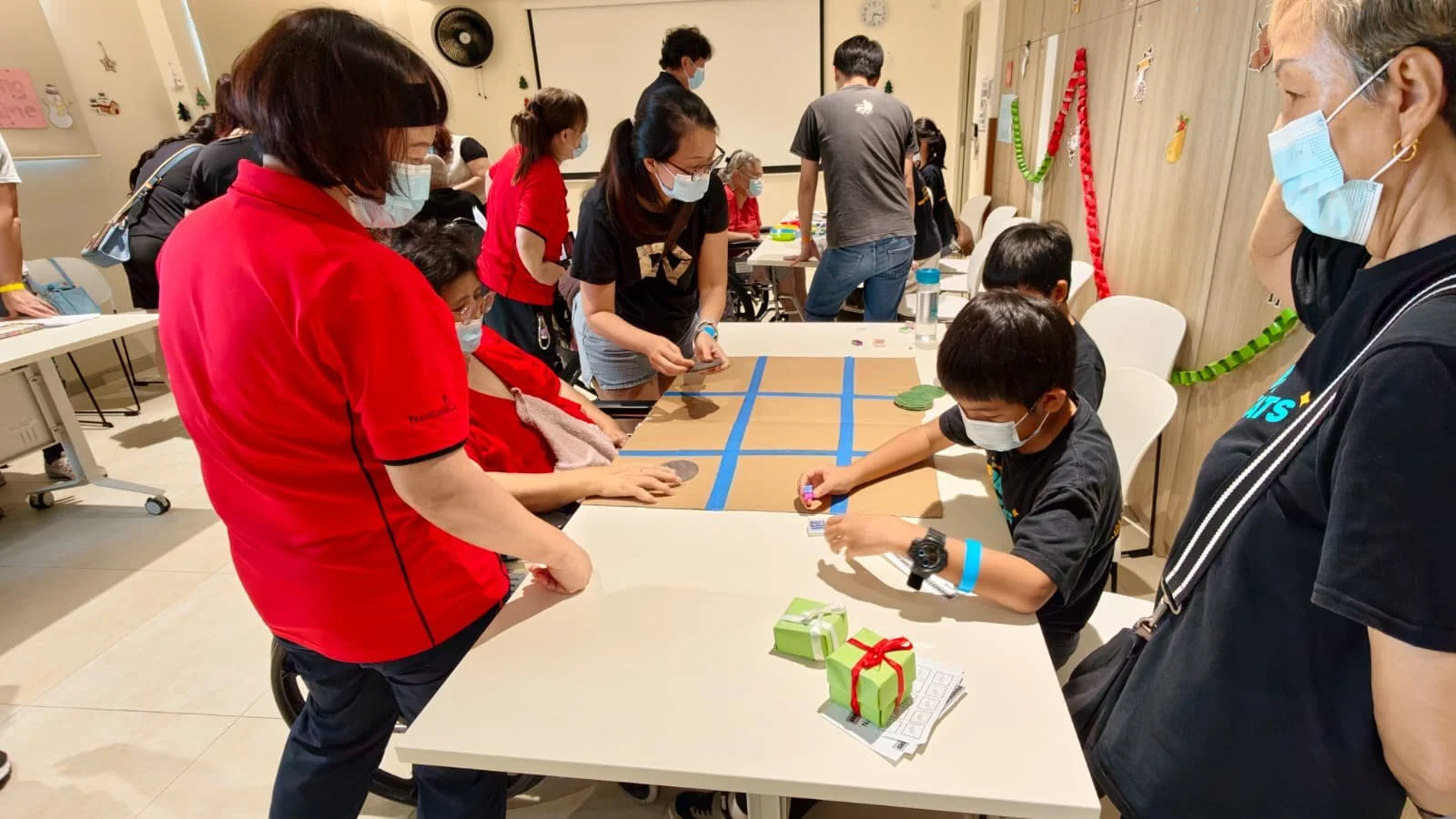
In most student care settings across Singapore, community engagement — when it exists at all — tends to be teacher-directed. Adults design the programme; children participate in it. Brave Feats made a deliberate choice to invert that logic, and this shows up in how the teachers work with the kids.
How did impact show up beyond the carnival?
Staff became closer. The shared intensity of planning and executing an event of this scale created a sense of unity. Adversity, it turns out, is also a team-building strategy.
For some of the kids, they went home and tried to play games with their own grandparents.
For the centre principal, Li Ting, she was also reminded to pay more attention to her own parents, especially in a busy environment in Singapore.
Organising the Joyful Carnival has been taxing for the teachers, but they wouldn’t have it any other way. In fact, they’re thinking of what’s next.
When asked whether the teachers would want to do this again, all of them said that they would be open to it - despite how time-consuming the process has been. Seeing the outcomes of the children-led event was worth it.
Staying committed to do this, is by any measure, unusual. Student care centres in Singapore operate with limited bandwidth — teachers are stretched, parents expect homework to be done, and operations absorb most of the day. For the team at Brave Feats to carve out time for this kind of child-led planning was a conscious act of prioritisation. There were many tensions to be managed, to stay true to the culture they hope to build.
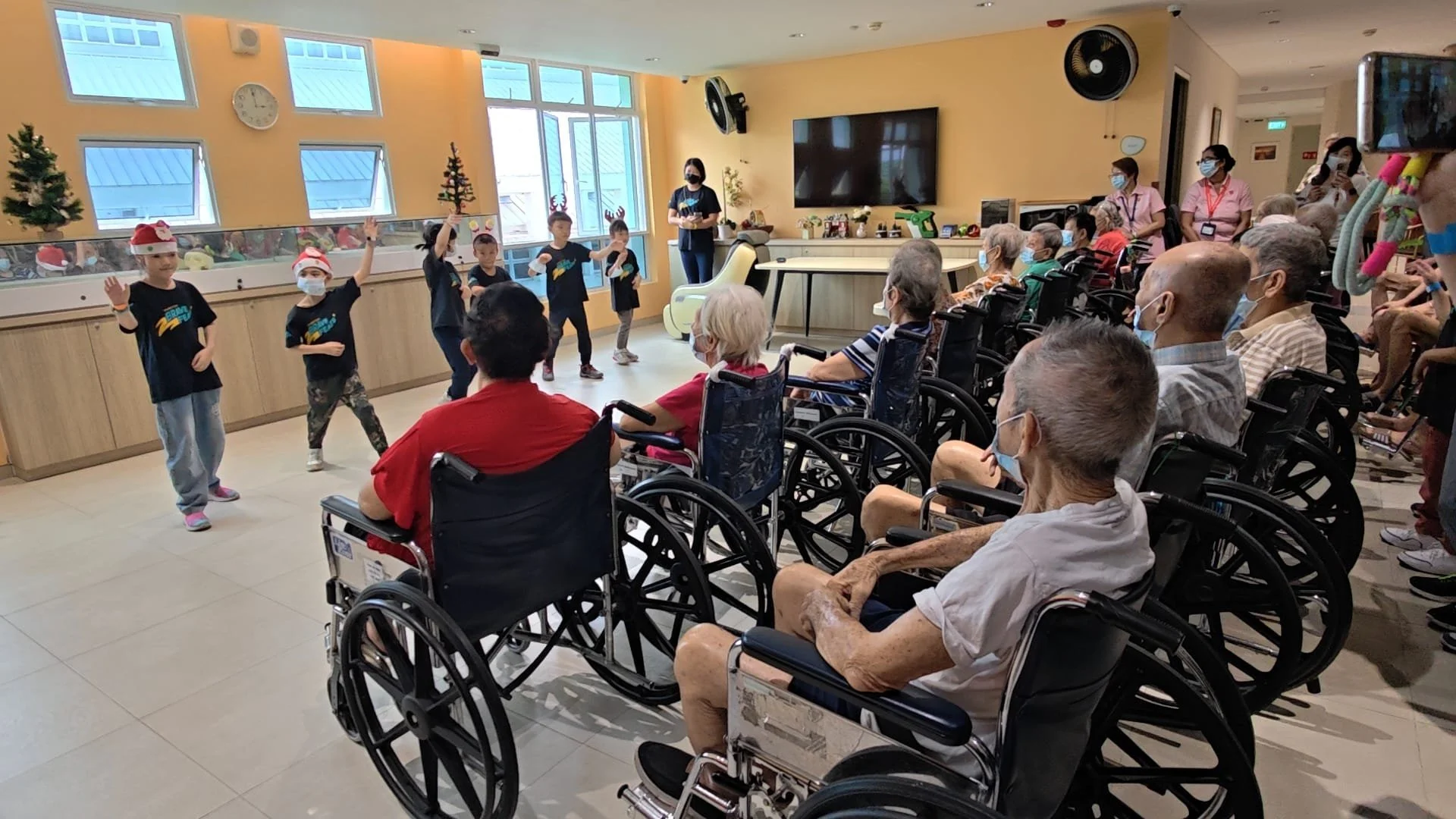
To pull off a successful Joyful Carnival, many tensions and challenges had to be managed, such as:
balancing ideal and operational needs on top of daily centre work
accepting parents’ perceived importance – some see it as a ‘nice-to-have’ more than a ‘must-have’, which then affects attendance
managing the pull between allowing children to be authentic participants of their own experience, and the cultural pressure to produce something polished enough for public scrutiny (process vs outcomes).
Singapore's high-achieving culture does not easily make room for imperfection. However, Brave Feats co-founder Chuen-Yin argues that imperfection is precisely where learning lives.
“We are in a culture where we must do things of a certain standard and quality, and this also comes from the kids.
This is a tension we have to hold - allowing kids to be authentic and enjoy the process through exploring and trying, vs focusing on perfecting the outcome and being more performative.”
– CO-FOUNDER, CHUEN-YIN reflects on THE TENSIONS THEY HAVE TO HOLD AS A TEAMThrough her time at Brave Feats, the centre's principal Li Ting has also witnessed how the evolution of her personal beliefs about children accompanied the growth of her professional skills.
Coming from a childcare background where programmes are more teacher-directed, she had not expected what she saw in the Brave Feats’ children: their seriousness of purpose, their capacity for independent thought, their willingness to take ownership.
But such revelations only come after undergoing the pressures of doing things differently — not before. Li Ting had to undergo all the discomfort of operating a large, complex event — managing timelines, coordinating manpower, handling last-minute discoveries like the need to draft a parental consent form for photographs on social media. The final week before the carnival was, by her own account, challenging. Things surfaced at the last moment. Logistics refused to behave.
There was also the dance performance to manage. Not all children attended the centre every day, which made consistent rehearsal nearly impossible. The decision was made to bring in a dance instructor and begin practices a full month in advance — not to chase perfection, but to give the children enough confidence to perform with joy rather than anxiety.
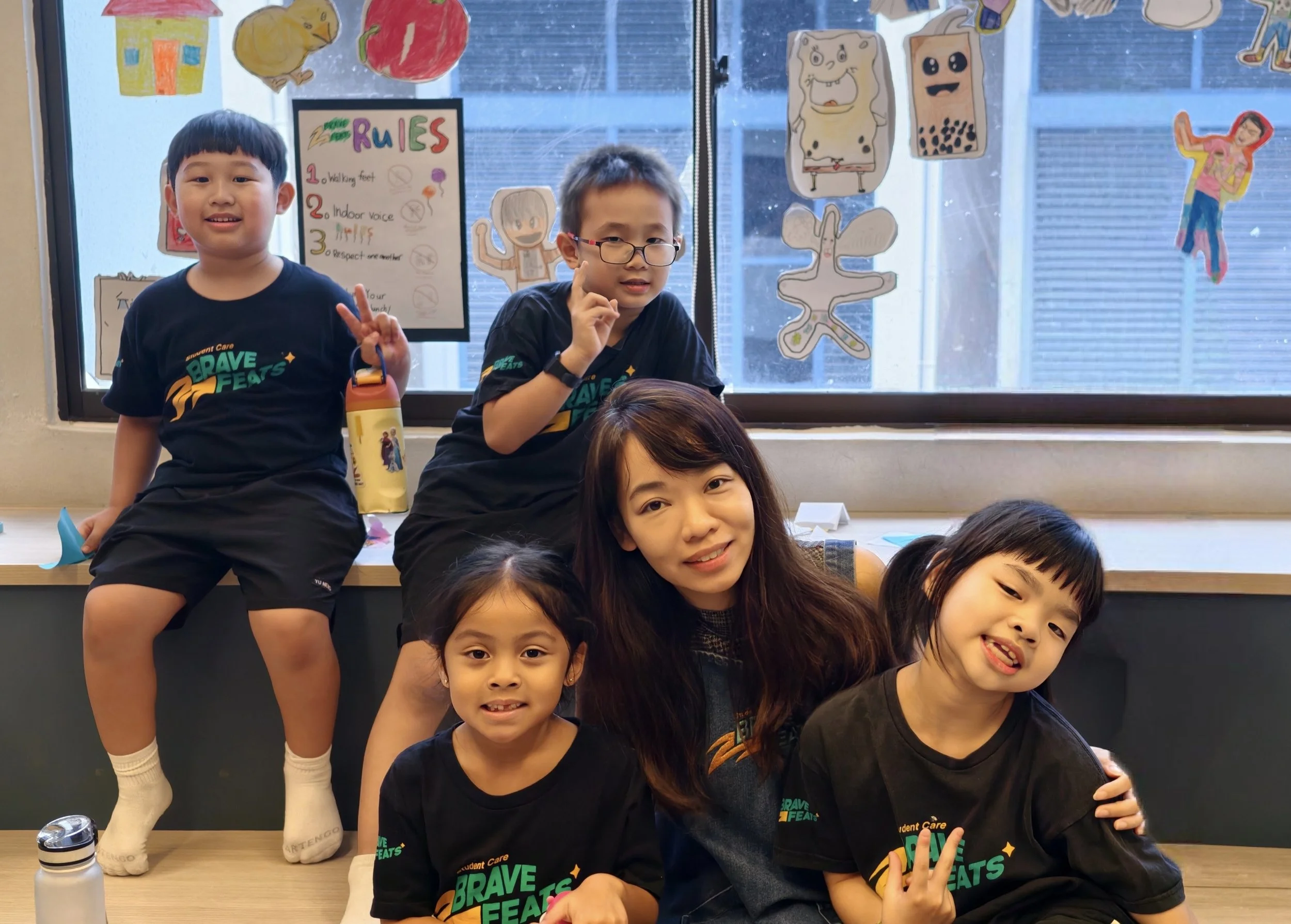
For Li Ting, the change was also personal. She entered the project uncertain about what the children were capable of. She emerged from the process trusting children in a way she had not done before.
Today, she sees her role as a principal as more about being a custodian of conditions rather than a director of outcomes — someone who creates the space, then gets out of the way.
“It was not an easy process operationally, but it was an amazing event that came together with the support of my teachers. There was a lot of laughter, even though it was tiring. I’ve also grown professionally, as I now see things from a wider perspective.
The carnival also reminded me to spend more time with my own mum.”
– LI TING LIAUW reflects on the experience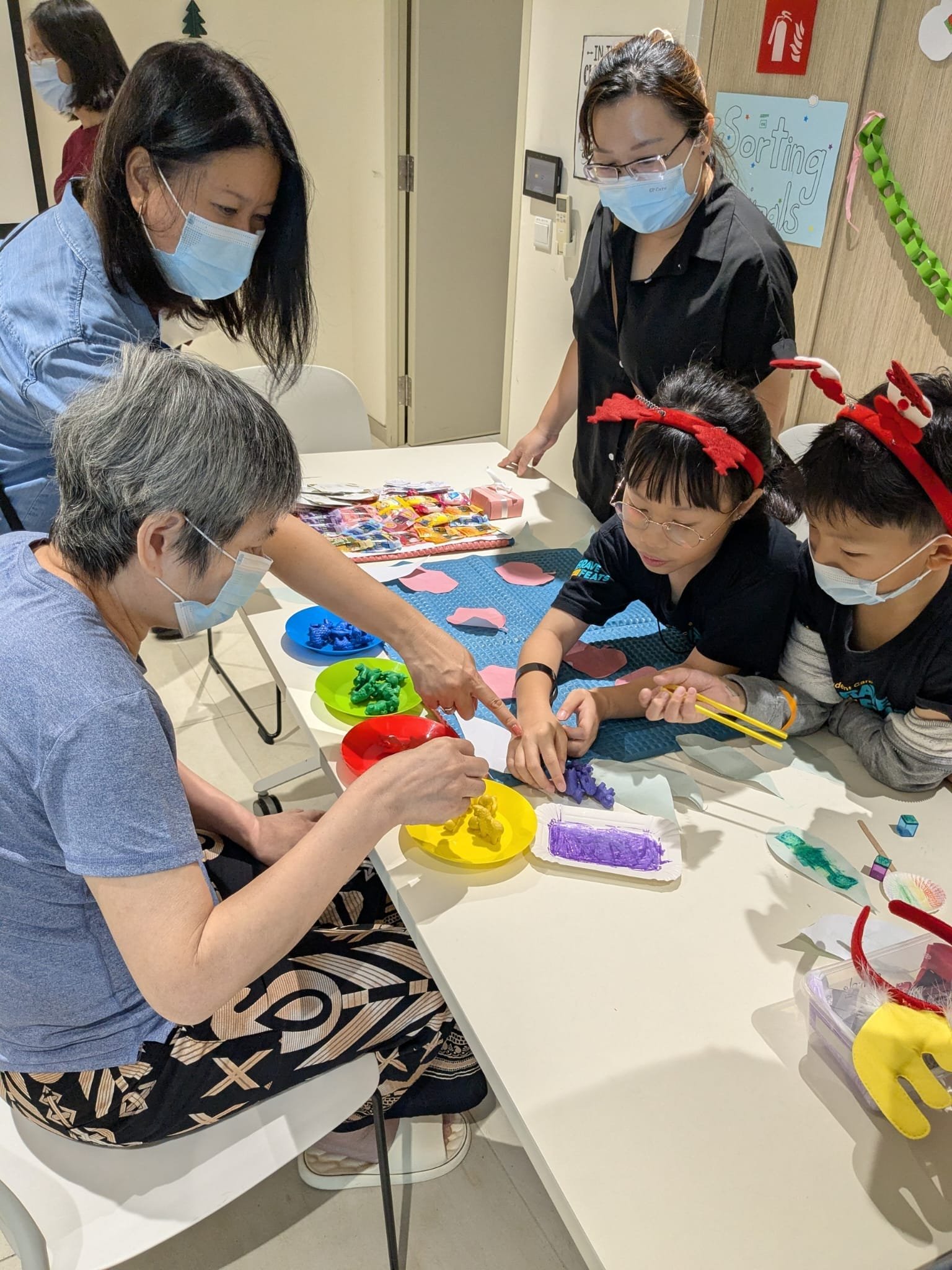
Chuen-Yin has a phrase she returns to: children are agents of change. It is easy to say this. It is harder to build an environment where it is actually true — where children are consulted, trusted, and allowed to lead, even imperfectly.
The Joyful Carnival was evidence that it is possible. A group of primary school children learned what dementia is, designed games for elderly strangers, memorised phrases in languages they usually don’t speak, and showed up on a November morning ready to care for someone they had never met. The seniors laughed. The children grew. The staff found each other. And somewhere in Singapore, a few grandparent-grandchild relationships became, perhaps slightly, warmer.
That is what human connection looks like when children are given the will and the space to make it happen. And it is, as Chuen-Yin might say, entirely possible — for any student care centre willing to believe and commit to it.
“Human connection is always possible, if there’s a will.
We need to see the potential of kids - they are so open to learn, connect, and do different things. We might think that ‘kids can’t do this’, but we (Brave Feats) believe in it, and we give them the agency.”
– CHUEN-YIN reflects on THE EFFECT OF GIVING CHILDREN AGENCY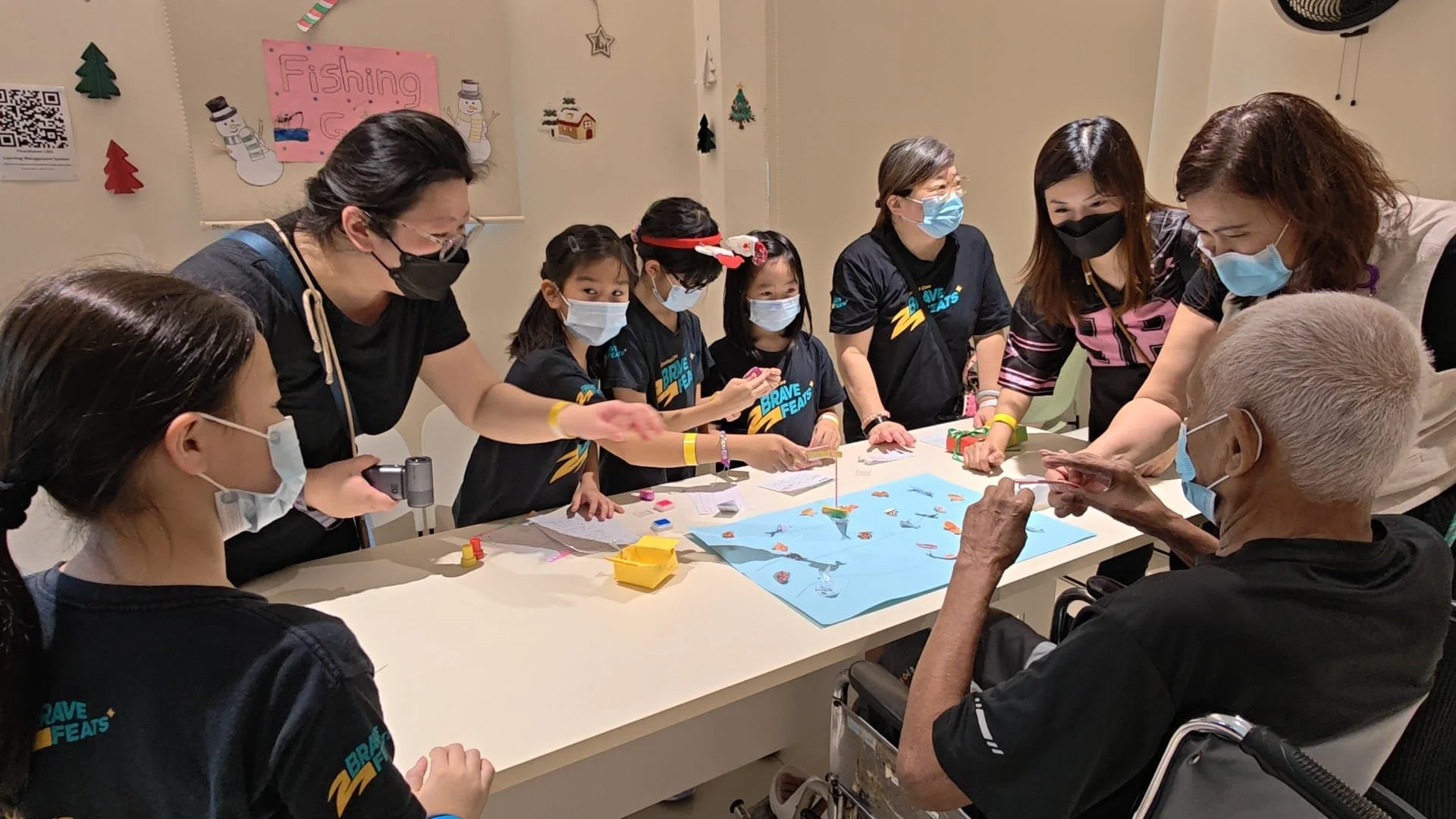
ABOUT BRAVE FEATS STUDENT CARE
Brave Feats Student Care is an after-school student care centre with a focus on socio-emotional learning, co-founded by Shaina Yu and Chuen-Yin Ng.
Brave Feats believes after-school student care centres are an essential member of a “village of care” - the small ecosystem of different stakeholders (parents, school teachers, therapists, special needs educators, allied educators, etc.) who must work collectively to raise joyful, secure and purpose-driven children.
To support the overall wellbeing of children, Brave Feats practises:
creating a positive space for children;
supporting children to experience joy;
helping children spread joy through impacting communities; and
partnering with other members of a child’s “village of care”.'
GET IN TOUCH WITH BRAVE FEATS